
Views: 0 Author: Site Editor Publish Time: 2026-05-11 Origin: Site


Selecting hardware for seating involves much more than visual appeal. It serves as a critical engineering and supply chain decision for residential furniture production. Every detail matters when scaling up your upholstery lines. Mismatched hardware often disrupts manufacturing flows and causes frustrating delays on the factory floor. Inconsistent finishes and structural failures like sagging or cracking directly impact return rates. They ultimately harm brand reputation and erode consumer trust over time. We created this guide to provide an evidence-based framework for industry professionals. Procurement managers, furniture designers, and manufacturers will learn exactly how to specify and evaluate these core components. You will discover how to source custom sofa legs for residential furniture at scale without compromising quality. Our insights cover structural integrity, material tolerances, and precise hardware configurations. You can use this knowledge to streamline production and deliver superior seating products.
Material Selection Dictates Durability: Metal legs require specific wall thicknesses (0.35–2.0mm) for high load-bearing, while wood legs require optimal species selection (e.g., Rubberwood, Oak) and eco-coatings to prevent splitting.
Hardware Integration is Critical: Assembly efficiency hinges on pre-configured hardware, evaluating hanger bolts versus threaded inserts or mounting plates.
OEM Capabilities Reduce Friction: Advanced CNC machinery and ISO-certified quality control drastically lower defect rates during mass production.
Dimension Standards Influence Design: Leg height (from 2 to 8 inches) alters both ergonomics and visual spatial perception in residential settings.
Furniture stability relies heavily on robust foundation systems. You cannot overlook structural support when dealing with dynamic residential use. Couches endure constant movement, weight shifts, and high-impact seating daily. Engineered hardware prevents frame sag effectively. Specific metal profiles easily target load capacities up to 2,000 pounds. This baseline engineering requirement ensures long-term consumer safety. It also drastically extends the lifespan of the upholstered frame above.
Assembly line efficiency dictates overall factory profitability. Manufacturing floors thrive on predictability and speed. Precision-milled legs reduce assembly time significantly. Standardized components slide smoothly into pre-drilled frames. Workers face fewer bottlenecks during final assembly stages. You lower labor costs by eliminating manual adjustments. Fast, reliable installation processes keep production schedules entirely on track.
You can leverage these parts for strategic brand differentiation. Proprietary turned wood shapes capture traditional market segments easily. Bespoke metal castings establish a distinctly modern market position. You achieve this without overhauling core upholstery processes. Small hardware swaps yield entirely new product lines quickly. We see many brands dominating niches simply by introducing unique foundation profiles. This strategy maximizes catalog variety while minimizing heavy engineering investments.
Manufacturers constantly weigh material costs against dimensional stability. We see Natural Rubberwood dominating high-frequency manufacturing environments. It offers an exceptional cost-to-stability ratio. Rubberwood absorbs stains beautifully and resists warping. Hard Maple handles extremely heavy loads effortlessly. It features a dense, closed grain perfect for robust structures. Walnut provides unmatched luxury aesthetics for premium collections. Its rich natural color elevates high-end residential designs instantly.
Finishing treatments define material longevity and performance. Eco-coatings protect surfaces safely without releasing harmful volatile organic compounds. You must apply anti-moisture and anti-crack varnishes carefully. These specialized treatments ensure durability across wildly different global climates. They stop humidity from destroying the internal wood fibers. You might also order sanded-only options for factory finishing. This allows your in-house team to apply custom stains directly. It guarantees a perfect color match across your entire furniture set.
Best Practices for Wood Specifications:
Specify exact moisture content levels (usually 8-12%) before shipping.
Request sample finish blocks to verify stain absorption rates.
Use cross-grain cutting techniques to maximize weight-bearing capacity.
High-yield metals offer distinct advantages for modern aesthetics. Material grading determines structural performance instantly. 304 Stainless Steel delivers rust-proof, premium results. It easily resists household cleaning chemicals. Iron suits rugged, industrial applications perfectly. It requires robust powder coating to prevent oxidation. Aluminum provides lightweight, anti-corrosive benefits. We often see aluminum used in modular seating requiring easy transport.
Technical parameters demand strict engineering attention. You must specify exact wall thickness. Standard profiles range from 0.35mm to 2.0mm. Heavy residential sofas demand the upper end of this spectrum. Hollow-pillar structures require reinforced welding for absolute safety. Weak joints collapse quickly under lateral pressure. Proper weld penetration prevents these catastrophic field failures.
Surface finishes must scale efficiently across mass production. Matte powder-coating hides fingerprints and dust remarkably well. Chrome plating adds brilliant, modern shine to contemporary pieces. Brushed textures resist minor scratching from vacuums or shoes. Consistent finishing applications elevate the perceived value of the final piece.
Material Type | Primary Advantage | Best Finishing Option | Ideal Design Style |
|---|---|---|---|
Natural Rubberwood | High stability, cost-efficient | Eco-coating, Custom Stain | Transitional, Scandinavian |
Hard Maple | Extreme density, heavy loads | Clear Varnish | Traditional, Heavy-Duty |
304 Stainless Steel | Rust-proof, premium strength | Brushed or Chrome | Modern, Contemporary |
Aluminum | Lightweight, anti-corrosive | Matte Powder-Coating | Minimalist, Modular |
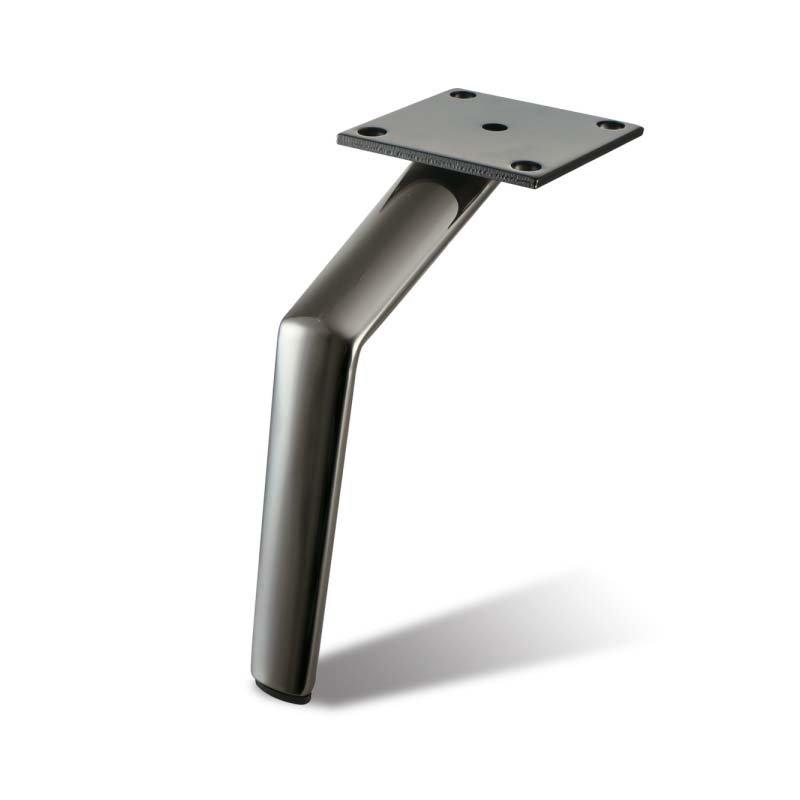
Leg height directly alters human ergonomics and comfort. It also changes visual spatial perception dramatically in residential settings. Low-profile designs sit closely between 2 and 4 inches. They work beautifully for traditional, deep-seated, heavy residential sofas. These heights encourage a relaxed, lounging posture. They anchor large furniture pieces firmly to the ground visually.
Mid-range heights measure strictly between 5 and 6 inches. The furniture industry favors this standard broadly. It balances human comfort and practical floor clearance perfectly. Robot vacuums navigate under these units easily. This functional clearance drives massive consumer demand today. It eliminates dust accumulation traps beneath heavy frames.
High-profile designs reach 7 to 8 inches or more. Mid-century modern layouts rely on them heavily. They increase visual space in smaller residential layouts. Elevated frames expose more floor area to the eye. This creates an optical illusion making cramped rooms feel much larger. They also assist elderly users by raising the seat deck significantly.
Seamless factory assembly hinges entirely on precise hardware integration. Pre-installed fasteners speed up factory production incredibly. You should evaluate 5/16-inch or metric heavy-duty hanger bolts carefully. Dowel screws offer another viable, strong attachment method. Pre-threading these components off-site saves your team countless labor hours. It guarantees identical protrusion lengths for every single piece.
Un-drilled sofa frames require specific external plate systems. Metal mounting plates spread weight loads evenly across wooden frames. Wood mounting blocks provide traditional, bulky anchor points. Flat mounting plates adapt easily to complex corner geometry. You simply drive wood screws upward into the frame chassis.
Custom B2B orders require crystal clear communication. You must explicitly state your specific hardware needs. Manufacturers need to know if hardware comes pre-attached or supplied loose. This depends entirely on your internal assembly line setup. Requesting specialized mounting solutions ensures seamless integration. You can comfortably order custom sofa legs tailored to exact production requirements. This eliminates secondary processing steps completely.
Common Hardware Mistakes to Avoid:
Ignoring thread pitch differences between metric and imperial systems.
Failing to specify hanger bolt protrusion length, causing frame puncture.
Using thin mounting plates easily prone to bending under heavy loads.
Partner selection dictates product viability and timeline success. Prototyping capabilities reveal supplier competence very early. Look closely for partners offering rapid CAD-to-prototype turnarounds. You need to validate physical form and structural integrity quickly. Do this before initiating any expensive mass production runs. Physical samples allow engineers to test actual load tolerances safely.
Advanced CNC equipment guarantees absolute machining precision. Human error drops dramatically on automated production lines. You secure 100 percent uniformity across complex, detailed shapes. Fluted, reeded, and intricately carved wood designs demand this exactness. Inconsistent shapes disrupt assembly and frustrate end consumers. CNC routing reproduces identical profiles across ten thousand units flawlessly.
Customization depth sets elite OEM suppliers far apart. They handle extreme specification granularity effortlessly. We look for custom color-matching stain capabilities using standard PANTONE systems. Proprietary mounting hole alignments also require strict, unwavering attention. A capable partner adapts to your engineering blueprints seamlessly. They modify their tooling to match your exact structural demands.
Global trade requires rigorous, documented quality control. ISO certification proves a supplier’s deep commitment to manufacturing excellence. These established standards matter immensely for global trade compliance. They ensure consistent safety baselines across multiple distinct production batches. You mitigate legal liabilities by partnering strictly with certified factories. Documented quality control paths trace every defect back to its source quickly.
Defect rate management aggressively protects your operational bottom line. You must vet a supplier’s raw material sourcing thoroughly. Ask directly about their moisture content testing protocols for wood. Proper kiln drying prevents post-delivery warping completely. Moisture-heavy wood cracks violently during climate shifts. Metal components require strict salt-spray testing to validate rust resistance.
Bulk procurement economics stabilize long-term manufacturing operations. Leveraging wholesale ordering locks in favorable landed costs. It effectively offsets volatile, rising global freight expenses. Reliable lead times sustain continuous manufacturing cycles flawlessly. You avoid costly stock-outs and delayed retail deliveries.
Supply Chain Risk Mitigation Steps:
Audit the supplier’s ISO 9001 certification validity annually.
Establish clear, written tolerance limits for dimensional variations.
Require third-party moisture testing reports before container loading.
Consolidate shipping volumes to maximize freight container utilization.
Sourcing robust foundation hardware requires highly strategic thinking. Moving beyond basic aesthetic catalogs proves absolutely essential for scale. You must evaluate strict material tolerances rigorously. Mounting compatibility dictates your assembly line speed directly. The supplier's OEM scalability determines your long-term commercial success.
We encourage procurement buyers to consolidate their specifications carefully. Document your required dimensions, exact finishes, and specific hardware profiles. Reach out to a verified manufacturing partner today. Request a formalized physical prototype or a detailed Request for Quotation (RFQ). Proactive planning guarantees stronger, more reliable residential furniture production overall.
A: It varies entirely by contract and manufacturer. B2B orders often specify bare tops for plate mounting. Alternately, they specify pre-installed hanger bolts to match specific factory production lines. You must outline these exact hardware integration requirements clearly during the initial quoting phase.
A: High-quality steel or stainless steel legs should comfortably support upward of 1,500 to 2,000 lbs collectively. They require an appropriate wall thickness, generally 1.2mm or greater. Reinforced hollow-pillar welding ensures the structural integrity remains intact under dynamic residential loads.
A: Yes. Established OEM manufacturers fully support custom staining for wood materials. They also provide specific RAL powder-coating matches for metal components based on client spec sheets. Be aware this high level of customization may impact minimum order quantities.
A: Natural Rubberwood serves as the dominant industry standard. It boasts a fast growth cycle making it highly renewable. It provides exceptional physical strength and excellent stain receptivity. This delivers a premium look while maintaining strict budget controls.


