
Views: 0 Author: Site Editor Publish Time: 2026-07-23 Origin: Site


Have you ever sat on a newly assembled sofa only to feel an unsettling wobble? Incorrect furniture leg fittings inevitably lead to structural instability. You risk wobbly sofas, uneven surfaces, and severely split wood frames. We rely on stable furniture every single day. Yet, many people completely overlook the hidden hardware keeping everything securely upright. This guide provides a highly transparent, technical breakdown of how to evaluate hardware accurately. We will teach you how to evaluate different mounting plates. You will learn how to calculate correct spacing without mathematical errors. We also cover how to select the exact hardware needed for durable furniture assembly or restoration. Proper measurement prevents expensive damage to your favorite pieces. By mastering these foundational principles, you can prevent costly frame damage. You ensure a professional-grade, long-lasting result every single time you attach a new set of legs to your furniture.
Measurement is absolute: Center-to-center hole spacing determines compatibility; off-by-a-millimeter measurements risk hardware failure.
Hole shape provides tolerance: Slotted or oval holes offer critical wiggle room for retrofitting existing furniture frames.
Material dictates load: Standard alloy plates suit lightweight pieces, while a heavy-duty iron mounting plate is required for high-traffic or heavy load-bearing furniture.
Implementation rules: Mounting plates do not replace structural aprons on dining tables; they are designed primarily for sofas, cabinets, and light accent tables.
Let us discuss why precise furniture leg hole spacing matters far beyond basic aesthetics. Misaligned screws create immense shear stress on the internal wood frame. When you force a screw into a misaligned hole, it pulls the wood fibers in unnatural, contradictory directions. This tension inevitably leads to premature joint failure. Imagine dragging a heavy sofa across a thick carpet. The resistance creates a strong lever effect on the leg. If your spacing is imprecise, the hardware cannot distribute this energy properly. The frame cracks as a direct result.
The industry standard for evaluating hardware compatibility relies exclusively on the center-to-center measurement. You must calculate the exact distance between the middle points of two adjacent or diagonal holes. Precision here remains non-negotiable. Here is the professional method to capture this metric flawlessly:
Grab a set of digital calipers or a highly precise machinist ruler for guaranteed accuracy.
Identify two adjacent holes and measure the horizontal distance directly between their centers.
Measure the vertical spread using the exact same center-point methodology.
Measure the diagonal spread across the entire plate to confirm the overall footprint.
Record all of these figures in millimeters, as the vast majority of global hardware utilizes metric spacing.
Edge proximity also presents strict constraints during any installation or repair project. You must follow a critical structural rule of thumb. Mounting holes should sit at least 15mm to 25mm away from the furniture base edge. Placing hardware too close to the perimeter risks immediate wood tear-out. Composite materials like MDF or particleboard will quickly crumble under load if you ignore this vital clearance rule.
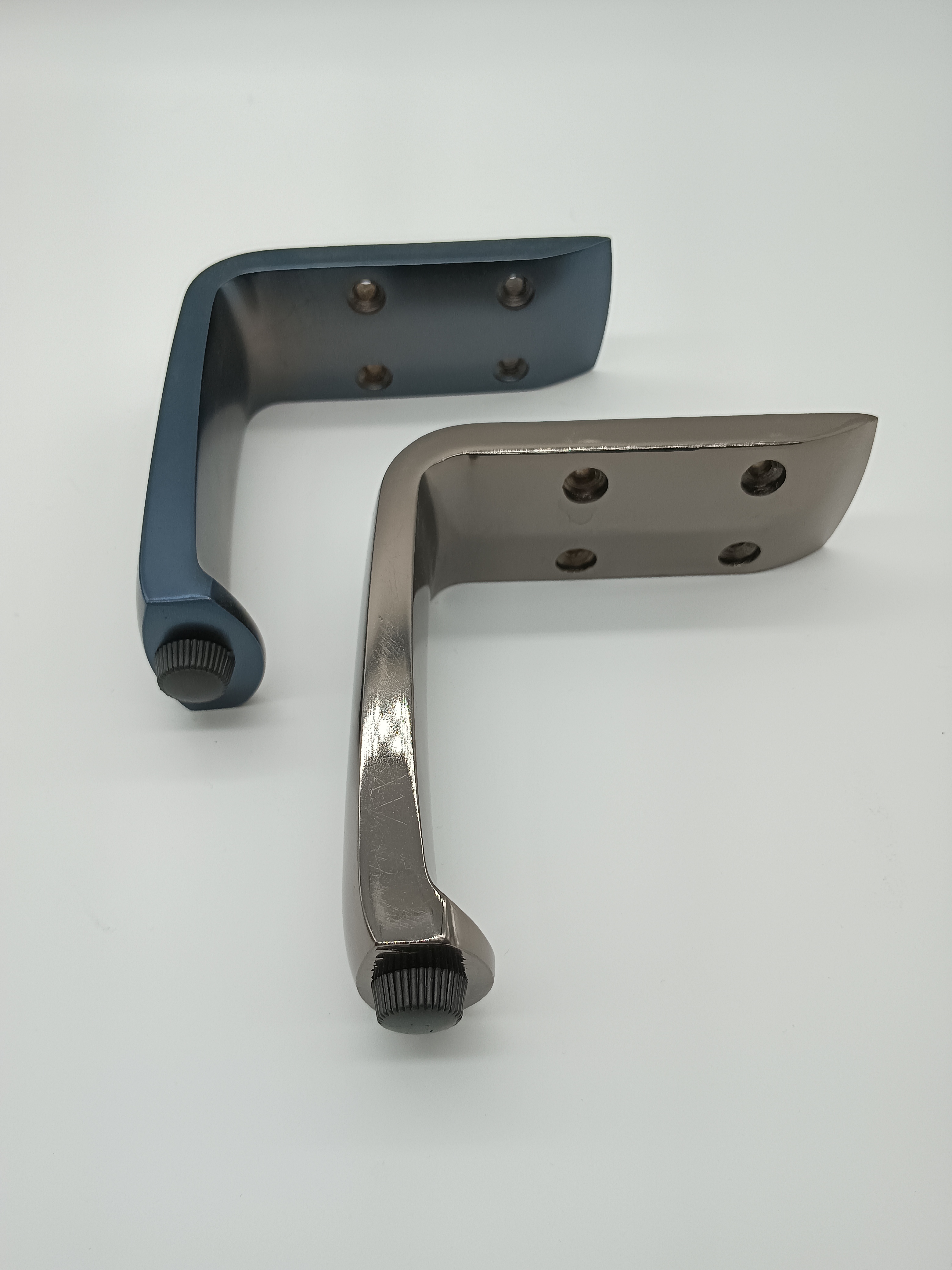
Understanding standard spacing metrics streamlines your entire hardware sourcing process. Most modern cabinetry and mass-market furniture rely heavily on the traditional 32mm system. You will frequently encounter standard metric spreads rather than outdated imperial layouts. Manufacturers standardize these plates to optimize mass production. This standardization makes replacements relatively easy if you know exactly what metrics to look for.
However, bespoke furniture builds and antique restorations present unique framing challenges. Standard plates rarely align with the existing internal framing blocks of legacy pieces. In these specialized scenarios, you must utilize custom hole sofa legs. These components provide tailored attachment points. They purposefully bypass compromised sections of old wood. Custom solutions prevent you from compromising the structural integrity of valuable vintage items. They allow you to mount hardware exactly where the wood remains strongest.
Retrofitting old frames brings a highly specific set of mechanical challenges. You must decide whether to plug old holes and start fresh, or source specialty hardware. If the legacy footprint is completely irregular or heavily stripped, plugging represents your safest route.
Here is a detailed chart highlighting different compatibility scenarios and the required actions:
Restoration Scenario | Common Spacing System Encountered | Recommended Hardware Action Path |
|---|---|---|
Modern Mass-Market Sofas and Cabinets | 32mm Metric System | Purchase standard off-the-shelf metric plates. |
Vintage or Antique Furniture Restoration | Irregular Imperial Layouts | Drill custom patterns or install dowel plugs first. |
Heavily Damaged Wood Frame | Compromised, stripped, or cracked holes | Use oversized plates featuring slotted adjustments. |
If you choose the plugging method, fill the old holes with hardwood dowels and premium wood glue. Once the glue fully cures, use a flush-cut saw to level the surface. You can then drill a completely fresh layout for your new hardware pieces.
Material durability directly dictates the lifespan and safety of your installation. Die-cast zinc and light alloys offer a highly cost-effective solution for many projects. They work perfectly well for stationary cabinets, small nightstands, or decorative accent tables. However, dynamic loads demand vastly stronger foundations. You strictly need a heavy-duty iron mounting plate for sofas, large beds, and heavy credenzas. Iron robustly resists aggressive bending forces. It significantly prevents thread stripping under daily movement, such as people sitting down heavily or tossing in their sleep.
You must also evaluate flat versus angled plate configurations carefully before purchasing.
Flat plates: These are ideal for straight, vertical loads. They dominate modern modular sofas and standard upright storage units. They transfer weight directly downward into the floor efficiently.
Angled plates: These typically feature a specific 10 to 12-degree pitch. They are strictly necessary for splayed legs, which are incredibly common in Mid-Century Modern designs. They strategically distribute directional stress away from the mounting screws. This ensures the leg does not snap off under lateral pressure.
Thread compatibility acts as the final, crucial checkpoint before you complete an installation. You must verify the center attachment point of the plate matches the leg bolt perfectly. Keep these verification steps in mind:
Confirm the diameter of the existing hanger bolt.
Identify whether the pitch is metric (M8) or imperial (5/16").
Test the threading manually before fully installing the plate into the wood.
Ensuring these threads perfectly match your chosen furniture leg fittings prevents loose connections. It also eliminates annoying wobbles and frustrating installation delays.
Rigidly drilled circular holes demand absolute perfection from your measurements. This strict precision complicates retrofits immensely, especially on imperfect or hand-built furniture frames. Wood remains a hygroscopic material. It naturally expands and contracts based on indoor humidity changes. Trying to force perfectly round hardware holes over an aging, shifting frame often creates intense structural tension.
The slotted solution removes this mechanical friction entirely. Utilizing oval-hole sofa legs alongside slotted mounting plates allows for critical micro-adjustments. You can slide the hardware slightly left, right, forward, or backward during the final tightening phase. This minor wiggle room accommodates seasonal wood expansion seamlessly. It also generously forgives slight human errors in your initial center-to-center spacing calculations.
However, slotted configurations introduce specific torque considerations. You need to control how pressure distributes across the surface of the hardware.
Common Mistake: Driving standard flat-head or countersunk screws directly into a slotted hole. The screw head will eventually wedge itself into the slot, splitting the metal or slipping through entirely.
Best Practice: Always use structural washers alongside oval holes. Washers distribute the downward torque effectively across a wider surface area. They ensure screw heads do not pull through the enlarged openings under heavy dynamic loads.
Executing a flawless installation requires strict adherence to pre-drilling mandates. You cannot simply drive screws blindly into a wooden frame and hope the joint holds. Hardwoods like oak or walnut require pilot holes closely matching the solid root diameter of the screw shank. Softwoods like pine need slightly smaller pilot holes to ensure the screw threads bite securely into the fibers. Skipping this vital pre-drilling step practically guarantees a split frame when attaching the hardware.
Screw selection plays a surprisingly vital role in the longevity of the joint. Many cheap mounting kits include soft, low-grade screws that easily deform. You should discard these immediately. Replace them with hardened steel wood screws engineered for guaranteed holding power. Soft screws easily strip their drive heads. They can also snap completely in half when they hit dense wood grain.
Finally, you must acknowledge distinct structural limitations when using this hardware. A transparent mounting plate guide will admit that plates cannot universally replace traditional wood joinery. You should never use them as a lazy substitute for mortise and tenon joints on large dining tables. They also fail rapidly on high-shear furniture pieces like tall kitchen bar stools. Plates are engineered primarily to support compressive vertical loads. They cannot withstand aggressive lateral rocking without the additional support of a solid wooden apron.
Your hardware choices ultimately dictate the structural lifespan of your furniture. Proper shortlisting logic ensures you make the right technical decisions every time. First, base your final purchase decision directly on your load requirements. You must choose between heavy iron and standard lightweight alloys based on daily usage. Second, verify mechanical compatibility by checking the hanger bolt thread sizes. A mismatched bolt renders the entire plate useless. Third, prioritize installation flexibility. Select slotted hardware over fixed circular holes whenever you work with imperfect wood frames.
Before you order any new components, take immediate physical action on your current pieces. Measure the existing frame’s viable mounting surface area accurately. Double-check your center-to-center distances using precise tools. By standardizing your approach to furniture leg hole spacing, you build solid pieces meant to endure a lifetime of heavy use.
A: Not without reinforcement. Mounting plates strictly require a solid backing. Screwing directly into a hollow core or thin MDF board will result in complete failure. The hardware pulls out immediately under lateral stress. Always install a solid wood block inside the frame first.
A: Most common European mass-market furniture utilizes a standard M8 bolt system. If your existing spacing does not match standard aftermarket plates, you have options. Use universal plates featuring slotted holes for flexibility. Alternatively, plug the existing holes with hardwood dowels and drill new ones.
A: It depends strictly on your aesthetic and structural intent. Use angled plates only if the leg itself is cut straight at the top but needs to splay outward. If the leg top is already cut at a specific angle, always use a flat plate.


