
Views: 0 Author: Site Editor Publish Time: 2026-05-05 Origin: Site


Upgrading or replacing your furniture supports is a high-ROI decision. It impacts much more than just room aesthetics. This simple change dictates your daily ergonomics, floor maintenance, and the overall lifespan of your furniture. Incorrectly sized or poorly constructed supports often lead to frustrating daily problems. You might experience knee strain, discover hidden dust traps, damage expensive flooring, or face sudden structural failure.
We designed this guide to solve these exact issues. We provide a clear, engineering- and design-based evaluation framework. You will learn to select the right sofa legs for home environments based on factual dimensions and real-world usage. We cover material load limits, floor compatibility, and actual installation realities. This knowledge empowers you to confidently buy and install the perfect supports for your living space.
Height dictates function: Choose 2-4 inches for modern stability, or 5-8+ inches to enable robot vacuums and reduce knee strain.
Material determines lifespan: Assess metal thickness (solid vs. hollow) and wood finish durability before prioritizing style.
Compatibility is crucial: Always verify mounting hardware (pre-drilled bolts vs. plate brackets) and floor protection needs prior to purchase.
Style anchors the room: Match leg profiles (e.g., Tapered, Hairpin, Bun) to the overarching interior design language.
Buyers often start their renovation journey focused entirely on appearance. However, height dictates daily comfort and crucial household hygiene. Evaluating the right height requires you to balance your household demographics with your routine cleaning habits. You cannot simply guess the correct dimension. You must measure your space and understand your physical needs.
A seat placed too close to the ground acts as a physical trap. Elderly family members or tall individuals often struggle to stand up from a low seating position. Raising the seating height shifts your center of gravity. This makes sitting and standing much easier. It significantly reduces dangerous pressure on your knees and lower back. Ergonomics play a massive role in daily comfort.
Furthermore, adjusting the height changes the visual weight of the furniture. Interior designers often use the 2/3 rule to balance a room visually. Lifting a bulky piece off the ground creates an illusion of openness. It allows light to flow effortlessly underneath the frame. This trick feels especially impactful in smaller apartments. It stops a heavy piece of furniture from dominating the floor plan.
Let us look at how different profiles function in a real home setting. You must weigh the structural benefits against your daily cleaning requirements.
Height Impact Chart | ||
Profile Height | Primary Advantages (Pros) | Primary Drawbacks (Cons) |
|---|---|---|
Low Profile (2–4 inches) | Maximum structural stability. Safer for households with toddlers or active pets. It prevents toys and pets from getting stuck underneath. | Provides zero airflow. You must move the heavy furniture completely to perform routine cleaning or retrieve lost items. |
Medium to Tall Profile (5–8+ inches) | Allows robot vacuums to pass freely. Offers excellent hidden storage potential for smaller living spaces. | Raises the center of gravity. Creates a tipping hazard if heavily leaned on. Requires structurally sound frames to prevent wobble. |
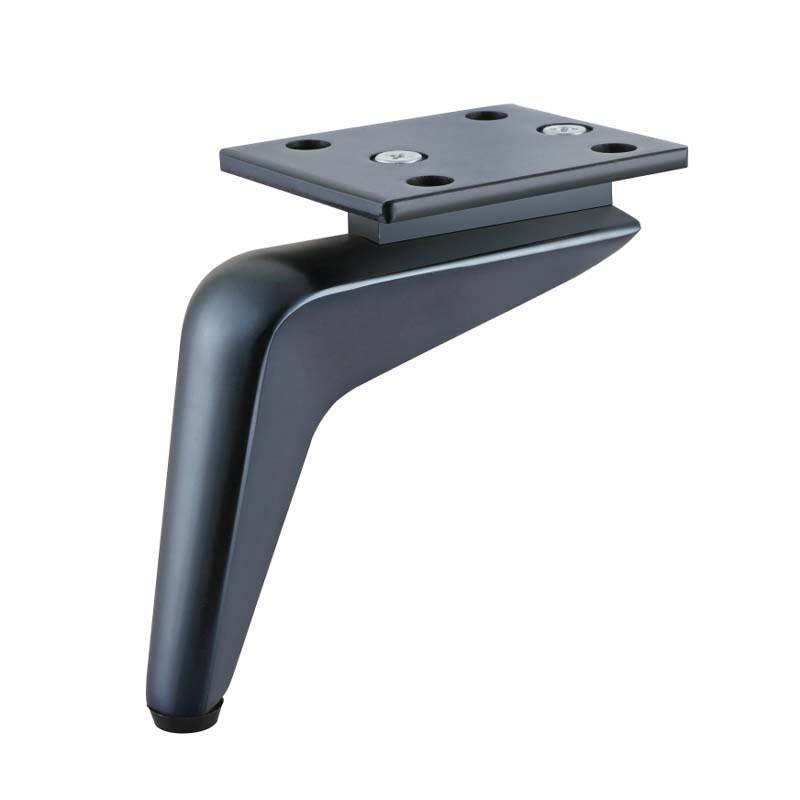
Not all materials are engineered equally. You must move beyond a simple debate between wood and metal. You need to evaluate the structural integrity and long-term maintenance realities of the sofa legs you plan to buy. Each material carries specific weight limits and maintenance burdens.
Metals offer excellent strength, but they carry distinct risks for your floors. Stainless steel remains highly popular. You should contrast industrial grade 201 with premium grade 304. Grade 201 is rigid but prone to rust in humid climates. Grade 304 is highly corrosion-resistant but noticeably more expensive. You must also check the metal wall thickness. Solid casts bear significantly more weight than thin hollow tubes.
Zinc offers a very smooth finish. However, it features much lower overall weight limits. Aluminum is extremely lightweight. Unfortunately, it is highly prone to scratching if you drag it across rough surfaces.
Implementation Risk: Heavy metal supports mandate high-quality floor protectors. You must use thick rubber or high-density felt pads. Without them, you risk gouging your expensive hardwood floors permanently.
Material Specifications Overview | |||
Material Type | Strength Level | Maintenance Needs | Best Used For |
|---|---|---|---|
304 Stainless Steel | Very High | Low (Wipe clean) | Heavy sectionals, humid environments |
Aluminum | Medium | Low | Lightweight modern loveseats |
Solid Hardwood (Oak) | High | Medium (Requires oiling) | Classic pieces, dry climates |
High-Density Plastic | Low to Medium | None | Temporary fixes, modular units |
Wood provides classic aesthetics but requires more active upkeep. You should carefully compare high-density species against softer, cheaper alternatives. Oak, mahogany, and walnut offer superior shear strength. They resist cracking under heavy static loads. Softer woods might splinter over time.
Wood requires periodic oiling or polishing. This routine prevents seasonal cracking in exceptionally dry climates. Wooden bases are also highly vulnerable to moisture. Frequent wet floor mopping damages the protective finish over time. You must wipe them dry immediately if they get wet.
High-density plastic serves as the standard budget alternative. It is suitable for lightweight, modular furniture or quick temporary fixes. We strongly warn against using plastic for heavy sectional units. They suffer from critically low shear strength. A sudden drop onto the seat can snap a plastic base instantly.
Once you lock in your height and material, narrow down your aesthetic profile. The shape should visually reinforce the room's overarching design era. Mismatched styles create visual confusion in your living space.
Tapered Legs: They are wider at the top and narrow down gracefully at the base. They remain the undisputed standard for Mid-Century Modern spaces. They provide a clean, uncluttered silhouette.
Hairpin Legs: These feature U-shaped metal rods. They offer extreme visual lightness to any bulky piece. They are ideal for industrial lofts or contemporary minimalist interiors.
Bun Feet: These are short, spherical, and distinctly chunky. They provide a grounded, exceptionally cozy feel. They are absolutely perfect for Farmhouse aesthetics or traditional heritage homes.
Cabriole (Curved) Legs: They feature distinct S-shaped curves indicating high formality. They are perfectly suited for Neoclassical, vintage, or bold maximalist decors.
Fluted / Spindle Legs: These showcase carved vertical grooves or intricate turned details. They beautifully bridge the gap between traditional colonial styling and modern eclectic designs.
You must clarify industry terminology to prevent costly purchasing errors. A standard fixed leg is not always the right solution for a dynamic, multi-use living space. Different bases serve very different functional purposes.
Standard Legs: They provide fixed, stationary weight distribution. Use them for pieces you rarely intend to move.
Castors (Wheels): These are functional, rolling additions for heavy, frequently moved pieces. Sleeper units or modular pit sectionals benefit greatly from castors. Ensure they feature a reliable locking mechanism.
Glides: These low-profile flat discs sit almost flush with the floor. They are designed purely to reduce friction. They help when pushing heavy furniture smoothly across thick carpets or delicate hardwoods.
We must briefly assess the current "floor-hugging" trend known as plinth bases. This style completely hides the support structure. It maximizes lounging security and makes the piece feel incredibly grounded. However, a solid base traps airborne allergens and pet hair aggressively. It limits room breathability entirely. Deep cleaning under a plinth base is nearly impossible without heavy lifting and specialized equipment.
A beautiful set of replacement parts is completely useless if it damages the frame during installation. You must meticulously evaluate the technical fit beforehand. Rushing the installation often leads to stripped wood and ruined furniture.
Hanger bolts offer the easiest DIY swap. They come pre-drilled and screw directly into existing hardware. They commonly use standard imperial 5/16-inch or metric M8/M10 threading. You must measure your existing bolt threads perfectly before ordering. Mixing metric and imperial threads instantly strips the internal nut.
Mounting plates or brackets serve a distinctly different purpose. They are required if the wooden frame has stripped holes. You also need them if you are changing from a single-bolt style to a broader base footprint. This method usually requires drilling fresh pilot holes to ensure a secure, long-lasting attachment.
You need specific tools for a safe and accurate installation. Prepare a reliable tape measure, a power drill, and a small level. Always distribute the weight evenly across all four corners. Check your measurements twice before drilling any new holes.
Never drag the furniture across the room after installing new supports. You must always lift it entirely off the ground to move it. Dragging applies massive lateral force to the attachment points. This action will snap the frame joint and severely ruin your piece.
Selecting the best supports requires a thoughtful, sequential decision process. First, determine the ideal height for your ergonomics and daily cleaning habits. Next, select a material rated appropriately for the overall static weight. Then, choose an aesthetic style that seamlessly complements your room. Finally, rigorously check your mounting hardware for compatibility.
We recommend a few immediate next steps. Flip your current seat safely backward. Measure the existing attachment bolt diameter carefully. Evaluate whether you need a height increase to help your knees. Gather these concrete details before you start browsing vendor catalogs.
A: No, they are not universally sized. Mounting threads vary significantly by region and manufacturer. The most common standard imperial size in the United States is 5/16 inch. In Europe and Asia, metric sizes like M8 or M10 are standard. You must always measure the diameter of your existing bolt before buying replacements.
A: You must evaluate the internal frame structure. Adding tall 8-inch supports to a frame built for a 2-inch stress load increases leverage drastically. This extra leverage applies severe lateral pressure to the mounting joints. If the wooden frame feels flimsy or uses cheap particle board, taller supports will cause the joint to snap.
A: Yes, but you must take precautions. Bare metal will scratch and gouge hardwood floors immediately. It is an absolute necessity to install high-density felt pads or thick rubberized glides on the bottom of the metal. Check and replace these protective pads annually.
A: It depends heavily on your furniture weight. Solid metal costs more but provides a massive weight capacity. It is ideal for large, heavy sectionals. Hollow metal tubes are much cheaper and lighter. They are perfectly fine for small loveseats or lightweight accent chairs, but they dent easily under heavy stress.


