
Views: 0 Author: Site Editor Publish Time: 2026-08-25 Origin: Site


Sectional sofas present unique structural challenges for any living room. Their massive frames endure disproportionate weight distribution daily. Standard three-seater couches simply do not face this level of dynamic strain. Shifting connection points between modular pieces require robust support systems. We wrote this guide to provide a functional framework for your hardware decisions.
You will learn how to select metal replacement or upgrade legs effectively. Proper sectional sofa legs prevent center sagging and maintain frame alignment. They also support high-traffic use in busy households. Selecting the right hardware requires a careful approach. You must balance your aesthetic intent against undeniable load-bearing realities. Upgrading your sofa supports ensures your expensive furniture remains structurally sound and visually striking for years to come.
Sectional stability relies on a three-part support system: visible end legs for styling, heavy-duty corner supports for joint integrity, and adjustable center feet to prevent frame sag.
Material choice matters: specific furniture alloy legs offer a high strength-to-weight ratio, while solid steel provides maximum load capacity.
Standardizing furniture leg fittings (like M8 or 5/16" hanger bolts) is critical to avoiding installation failure or frame stripping.
Total weight capacity must account for both the static weight of the sectional chassis and the dynamic weight of multiple users.
Modular couches do not distribute weight evenly across their frames. L-shapes, U-shapes, and extended chaise modules create severe load concentrations. A traditional sofa utilizes a simple linear load path. Sectionals introduce perpendicular extensions and deep corner seats. These geometric layouts concentrate extreme downward force into specific structural zones. When multiple people sit on a chaise lounge, the unsupported center spans endure immense pressure. If you lack proper sectional sofa legs, the wooden chassis will eventually bow.
User movement impacts the physical connection brackets between sectional pieces. When you sit down heavily, you generate horizontal shear stress. The modular locking pins or crocodile clips hold the upper frames together. However, these connectors transfer the lateral stress directly down to the nearest floor supports. Everyday activities push and pull the furniture modules. If the supporting hardware cannot resist these sheer forces, the connection brackets will eventually tear out of the wood.
Inadequate hardware leads to catastrophic frame failures. Wood warping is the most common early symptom. Once a frame begins to warp, the internal suspension wires lose tension. You will soon notice broken zig-zag springs protruding through the bottom dust cover. Mismatched or weak legs also threaten your flooring. When a cheap support bends under pressure, its sharp edges can drag across the room. This reality often results in severe floor gouging and expensive repair bills.
End legs serve as the aesthetic anchors of your furniture. They remain highly visible and define the entire silhouette of the piece. Designers focus on striking profiles for these specific locations. Popular architectural shapes include angular brackets, hairpin loops, and minimalist cylinders. Geometry directly impacts side-load stability. For instance, Y-shaped sofa legs distribute downward pressure across a much wider footprint. This flanged design drastically reduces the risk of outward bending when users lean heavily against the armrests.
Corner supports operate as the structural hubs of your seating arrangement. Two separate modular frames lock together at these precise junctions. You need much wider mounting plates here. A standard narrow plate cannot bridge the gap between intersecting wooden rails. Corner hardware must handle multidirectional weight bearing constantly. When family members wedge themselves into the deep corner seat, the load pushes down and outward simultaneously. Heavy-duty corner plates prevent the intersecting modules from splitting apart.
Oversized frames feature hidden middle spans requiring dedicated support. Center feet act as your primary anti-sag failsafe. You rarely see these components, but their function is absolutely critical. They stop long wooden rails from bowing toward the floor over time. We strongly recommend choosing adjustable-height center feet. Floors are rarely perfectly level. Carpet pile variations also create uneven resting surfaces. An adjustable mechanism lets you dial in the exact tension needed to support the middle chassis.
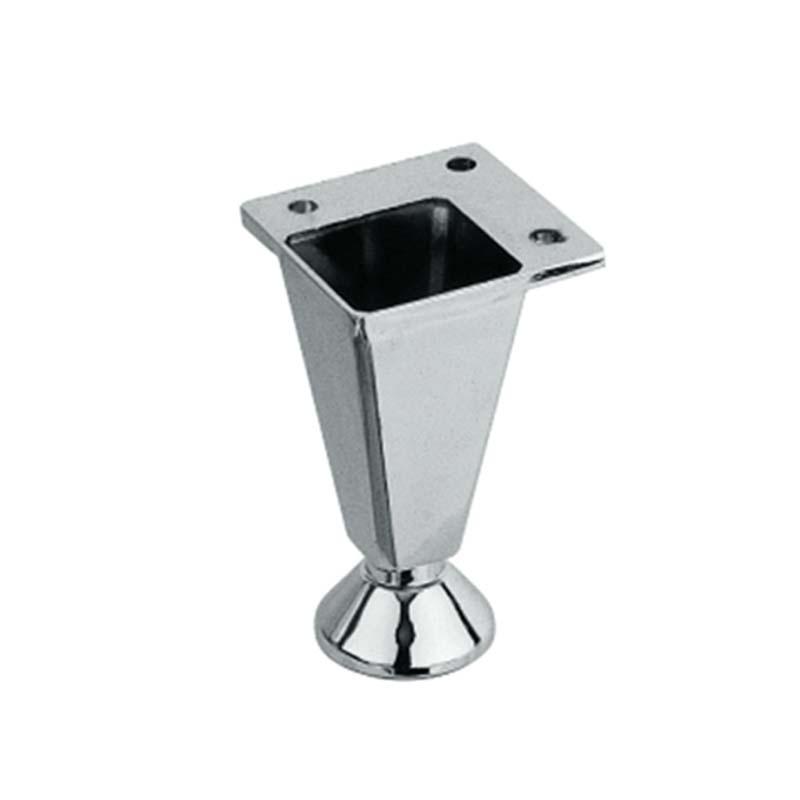
Metal is strictly preferred for heavy modular chassis. Hardwood looks beautiful, but it suffers from directional grain weakness. Wood can split down the grain when subjected to severe lateral shear stress. Metal provides isotropic strength. It resists bending and breaking equally in all directions. Metal hardware boasts a vastly superior yield strength compared to timber. High-yield materials deform elastically and return to their original shape after heavy loads are removed.
Steel and stainless steel offer the highest tensile strength available. We recommend solid steel for heavy commercial applications or oversized residential pieces. However, steel introduces significant weight constraints during shipping and handling. It also requires rigorous finishing to prevent rust.
Modern casting techniques offer excellent alternatives. Specific furniture alloy legs utilize zinc and aluminum blends. These blends are ideal for complex geometric casts found in mid-century modern designs. They naturally resist corrosion without heavy chemical treatments. Zinc-aluminum mixtures offer a perfect balance of moderate weight and exceptional structural rigidity.
Your chosen finish dictates long-term cosmetic durability. Powder coating involves baking colored resin onto the metal surface. This process provides immense scratch resistance against vacuum cleaners and shoe scuffs. Electroplating deposits a thin layer of metal, like chrome or brass, onto the core material. Electroplating looks highly polished but scratches more easily than powder coat.
You must prioritize floor protection during installation. Bare metal destroys hardwood and tile floors. Integrated polymer or felt floor glides are an absolute necessity. They prevent harsh metal-to-wood friction and allow you to slide the heavy sofa safely.
Material Comparison Chart for Sectional Legs
Material Type | Primary Benefit | Common Weakness | Best Use Case |
|---|---|---|---|
Solid Steel | Maximum load capacity | Heavy and prone to rust if scratched | Commercial or oversized sectionals |
Zinc/Aluminum Alloy | High strength-to-weight ratio | Lower sheer limit than pure steel | Complex geometric designs |
Hardwood | Traditional aesthetics | Splits under lateral stress | Lightweight, decorative seating |
Your installation method dictates the ultimate stability of the hardware. Square top-plates represent the industry gold standard. A standard four-screw installation provides maximum surface grab across the wooden frame. This wide dispersal prevents the leg from tearing out under pressure. Single-bolt installations rely entirely on one threaded hole. Single bolts work fine for lightweight chairs but frequently fail under the dynamic weight of heavy modular sofas.
You must understand thread pitch before attempting any replacements. A single mismatch will ruin your sofa frame permanently. The industry uses both metric and imperial measurements. Metric hanger bolts typically measure M8 or M10 in diameter. Imperial bolts usually measure 5/16-inch. These two sizes look nearly identical to the naked eye. However, they do not thread together smoothly. Forcing an M8 bolt into a 5/16-inch nut causes severe cross-threading. Always measure your existing hardware with a caliper or thread gauge.
Upgrading from wooden blocks to metal hardware introduces specific implementation risks. You cannot always screw new hardware directly into old holes. Standardizing your furniture leg fittings prevents catastrophic installation failure. If your original frame holes are stripped, you must intervene structurally.
You should install steel T-nuts to create fresh threads inside the wood. If the frame rail is badly splintered, T-nuts alone will not work. You must switch to heavy-duty adapter mounting plates. You screw these flat steel plates directly over the damaged area. The adapter plate provides a brand-new, securely threaded center hole for your replacement hardware.
Replacing hardware requires a systematic approach. Follow this standardized checklist to ensure compatibility and structural safety.
Step 1: Audit Current Hardware. Measure your existing leg height carefully. Changing the height drastically alters the ergonomic seating position. Verify your current thread and bolt sizes before ordering replacements.
Step 2: Calculate Load Requirements. You must determine the total required weight capacity. Use a standard industry rule of thumb. Add the static weight of the sectional chassis to the maximum dynamic weight of all potential occupants. Finally, add a 20% safety margin to that total number.
Step 3: Map the Configuration. Draw a simple diagram of your seating arrangement. Document the exact count and placement of every required component. A typical large L-shape might require four visible end legs, two heavy-duty corner supports, and three adjustable center feet.
Step 4: Verify Post-Sale Support. Check the manufacturer warranty terms specifically regarding metal finishes. Confirm the ongoing availability of replacement floor glides. Nylon and felt pads wear down over time and require eventual replacement.
Common Mistakes to Avoid: Do not guess your bolt sizes. Never install metal supports without soft glides. Do not ignore the hidden center spans when ordering your hardware counts.
Successful sectional sofa upgrades require a technical mindset. You must move beyond pure aesthetics and prioritize actual frame geometry. Properly distributed weight keeps your expensive furniture intact for decades. Select robust corner brackets to handle sheer stress. Install adjustable middle feet to eliminate invisible frame sag. Always protect your flooring with verified glides.
We strongly encourage you to physically inspect your undercarriage today. Remove the cushions and flip the modules backward cautiously. Check your existing connection points and measure your bolt threads. Confirm your fitting compatibility before finalizing any new hardware purchase. Taking these simple preparatory steps ensures a flawless and durable installation.
A: You must address standard structural span limits. Typically, you need one adjustable center support for any unsupported wooden span exceeding 36 inches. Measure the distance between your outer legs. If a gap spans 40 inches, install a middle foot to prevent sagging.
A: Yes, mixing materials is a standard industry practice. Designers often prioritize expensive metal hardware for visible exterior styling. You can safely use basic wooden blocks underneath the hidden middle sections. Just ensure the height matching is absolutely precise across all materials.
A: You should never force mismatched threads. Instead, purchase steel adapter plates. You screw these flat plates directly over the old, incompatible holes in the frame. The adapter provides a brand-new, correctly sized threaded hole for your upgraded hardware.
A: Bare metal is never safe for wooden or tile flooring. Unprotected edges will gouge your floorboards immediately. You must confirm that your new hardware features integrated nylon, rubber, or thick felt glides prior to installation. Replace these glides annually as they wear down.


